
Poresyn Solutions - DNA Modified Co-Polymer Coated CPG Manufacturer
2-3x loading capacity than conventional CPG and high purity performance to lown down your downstream purity cost.
Engineered for Long-Chain Oligonucleotide Synthesis
Our new architecture co-polymer coated cpg is designed for oligonucleotide synthesis, especially for ASO or SIRNA, this hybrid CPG solid support inherit the long-chain synthesis capability for oligonucleotide that it enables us to efficiently synthesis bases length ranging from tens to hundreds to even thousands.

Outstanding Loading Capacity
This thin layer of PS makes it easy to increase the load capacity of our hybird solid support, doubling it without compromising the ability to synthesize long-chain bases. This is made possible by the high load characteristics of polystyrene.
Advantages of Our Hybird CPG Solid Support
Poresyn Solutions’ new architecture co-polymer coated CPG is combining polystyrene resin and traditional controlled pore glass solid support, by applying the thin resin coating onto surface of CPG, we get excellent performance with loading capacity and purity and long-chain oligonucleotide synthesis capability.
Main advantages of our hybrid CPG solid support:
- High load capacity: 2-3x loading capacity than traditional CPG solid support.
- Anti-corrosion: iner to chemical reagents and solvents during synthesis and subsequents treatments.
- Non-swelling properties: preventing the swelling of resin during chemical reaction.
- Long-chain bases synthesis: supporting medium to extra long chain bases synthesis.
Comparision with Traditional CPG Solid Support
Stop settling for trade-offs! Unlike traditional CPG, Poresyn Solutions’ hybird co-polymer coated CPG solid support multiplies your manufacturing potential: you get 3x to 6x greater load capacity plus a major increase in purity. This powerful synergy means you can expect your production line to yield over 300% more output. Scale faster and cheaper—without compromising quality.
| CPG Pore Size (Å) | Applicable Oligonucleotide Synthesis Length (nt) | Traditional CPG Typical Load (µmol/g) | Poresyn Solutions Advantage Load (µmol/g) | Load Capacity Improvement |
|---|---|---|---|---|
| 500 Å | <40mer | 30-50 (Standard) | ~240 | 5X - 8X |
| 1000 Å | 40-100mer | 20-40 | ~160 | 2.5X - 6X |
| 2000 Å | 100-300mer | 10-30 | ~100 | 3X - 10X |
Our DNA Modified Co-Polymer Coated CPG Solid Support
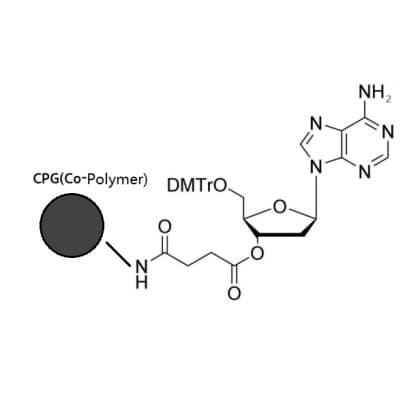
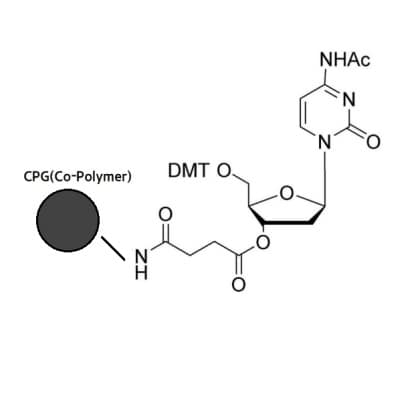
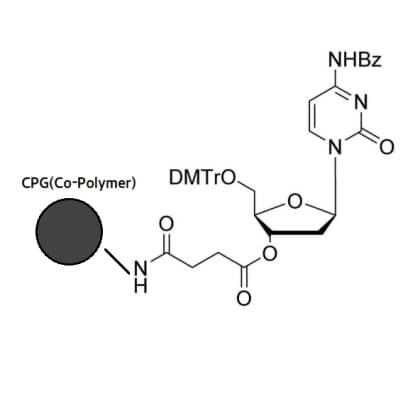
Following are the principal monomer types linked to our co-polymer coated CPG solid support for DNA synthesis.
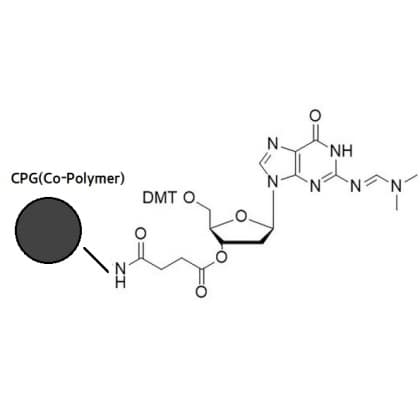
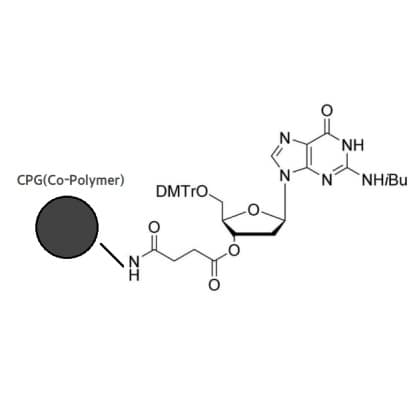
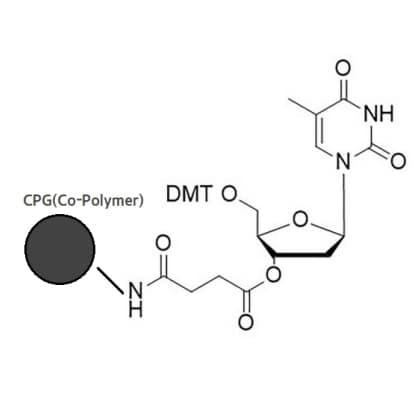
Higher oligonucleotide product output purity
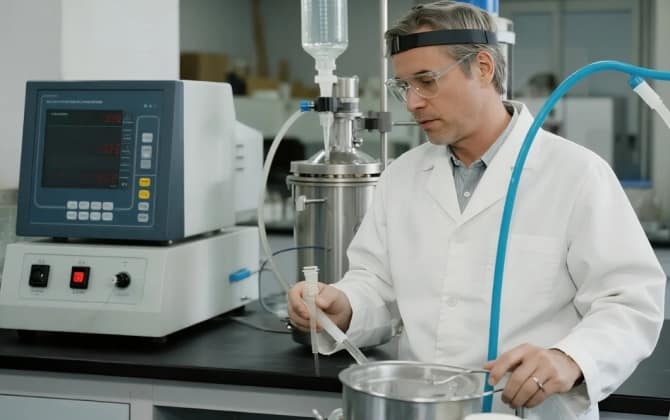
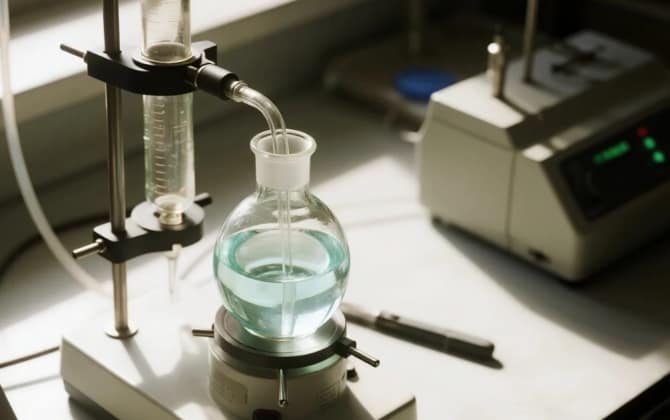
The polystyrene-coated CPG makes our solid support resistant to chemical reagents and solvents that would normally melt impurities like glass particles into the nucleotide molecule, improving the quality of the oligo products and significantly lowering the downstream purity cost.
What is DNA Modified CPG?
DNA Modified CPG (Controlled Pore Glass) serves as the starting solid support for oligonucleotide synthesis. It refers to a CPG bead that has been chemically linked with a deoxyribonucleotide single unit (dA, dT, dC, dG). This attached unit acts as the 3′ terminus (starting point) for the growing oligonucleotide chain.
Critically, this 3′ nucleoside can be a natural unit or, based on specific drug requirements, a modified monomer pre-functionalized with groups like amines, fluorophores, or cholesterol. This versatility ensures efficient and accurate construction of custom DNA sequences.
Applications in Nucleic Acid Therapeutics
Poresyn Solutions’ DNA Modified CPG is crucial for synthesizing various DNA sequences, primarily supporting the industrial production of ASO (Antisense Oligonucleotide) and siRNA (small interfering RNA) drugs. Specifically, it is utilized for:
ASO Drugs: Used to construct the ASO sequence, especially for those requiring custom modifications at the 3′ terminus to enhance stability and biological activity.
siRNA Drug Components: It serves as the starting support for synthesizing DNA components within siRNA duplexes, such as the DNA overhangs (wings) or the siRNA antisense strand itself.
gRNA Synthesis: The support is also applicable for synthesizing long nucleic acid sequences, such as the DNA templates required for the production of CRISPR-related guide RNA (gRNA).