Biotech Insights: Oligonucleotides, Peptides, and More

Explore our in-depth articles and knowledge on the latest trends and innovations in the biotech industry. This category covers key topics in oligonucleotide synthesis, peptide development, and other cutting-edge biopharmaceutical advancements. Stay informed about the latest techniques, research, and industry insights that shape the future of biotech. Whether you’re involved in oligonucleotide drug development, peptide research, or other biotech fields, our expert insights will help you stay ahead of the curve

The Ultimate Guide of SPPS Peptide Synthesis Process

The ultimate guide · 2026 SPPS Peptide Synthesis: The Ultimate Guide Everything you need to know about SPPS peptide synthesis — the chemistry, the complete workflow, protecting-group strategy, solid support selection, and how modern flow chemistry delivers longer peptides with up to 90% less waste. Workflow explained Boc vs Fmoc Resin vs CPG supports 15

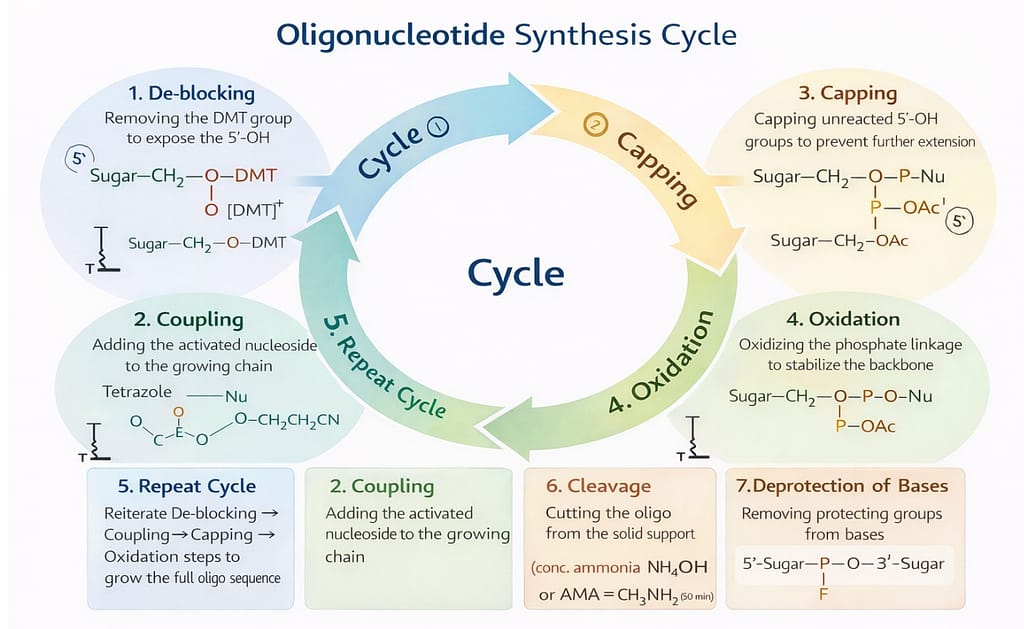
Oligonucleotide Synthesis Process Guide

OLIGONUCLEOTIDE SOLID-PHASE SYNTHESIS GUIDE Oligonucleotide Synthesis Workflow Using CPG Five-step solid-phase phosphoramidite chemistry, negative-pressure synthesizer operation, and reagent formulations — a complete technical reference from loading to purification. Solid-Phase Synthesis Phosphoramidite Chemistry CPG Support DNA & RNA 1 DeblockingRemove 5′-DMT 2 ActivationTetrazole catalyst 3 CouplingExtend by one base 4 CappingBlock failures 5 OxidationStabilize linkage In

Co-Polymer Coated CPG vs. Traditional CPG: Breaking the Technical Ceiling of Large-Scale Long-Mer Nucleic Acid Synthesis

Driven by the explosive growth of nucleic acid therapies such as antisense oligonucleotides (ASOs), small interfering RNAs (siRNAs), and CRISPR gRNA genome editing, the global biopharmaceutical industry’s demand for large-scale, high-purity raw materials has reached unprecedented heights. However, a major “bottleneck” restricting capacity and escalating costs lies in a core step of manufacturing these advanced

Understanding Loading Capacity in Controlled Pore Glass (CPG)

In the world of solid-phase synthesis, especially for DNA and RNA, Controlled Pore Glass (CPG) is the gold standard support material. One of the most critical specifications for CPG is its Loading Capacity, typically measured in μ mol/g (micromoles per gram). This metric defines how many moles of a starting nucleoside or functional group are

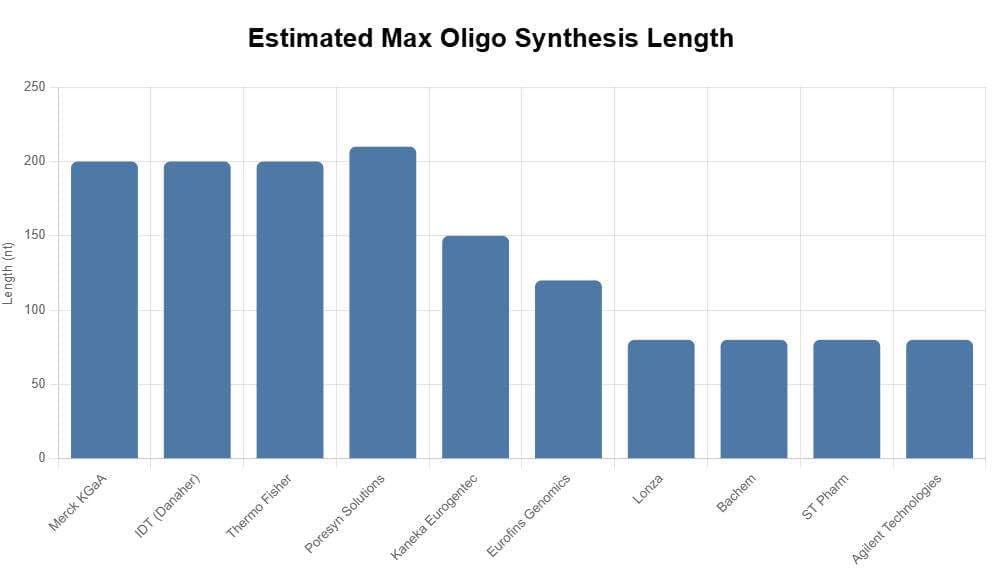
Top 10 Oligonucleotide Manufacturing Companies in 2026 (CDMO & GMP Leaders)

Introduction The global landscape of oligonucleotide manufacturing companies is rapidly evolving as more developers choose to outsource production to specialized partners. This shift is largely driven by the significant capital investment required for synthesis instruments, analytical platforms, and purification facilities, making collaboration with an experienced oligonucleotide CDMO a more efficient and scalable solution. We have

oligonucleotide therapeutics synthesis cycle

Ultimate Guide for oligonucleotide therapeutics

What’s oligonucleotide therapeutics Oligonucleotide Therapeutics is an innovative drug therapy that acts on human DNA/RNA. It achieves therapeutic effects by modifying genes, completing some gene fragments, and covering and masking problematic gene fragments. Usually, it requires regular injections or other forms of medication intake, such as one injection per year, or through gene modification to

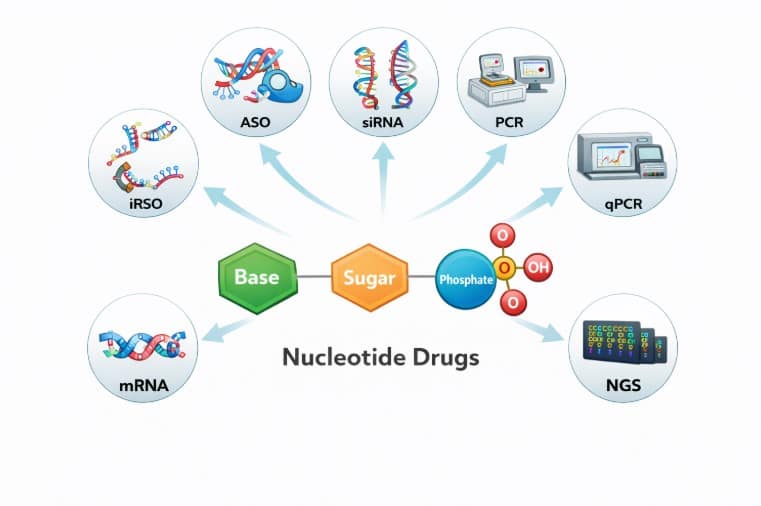
What Is a Nucleotide: Components and Function

Nucleic acid monomers refer to the most fundamental structural units that make up DNA and RNA – nucleotides, which are composed of nitrogenous bases, pentose sugars, and phosphate groups, and are linked by phosphodiester bonds to form nucleic acid chains. In all, Nucleic acid monomers = nitrogenous bases+pentose sugars+phosphate groups Nucleoside= a nitrogenous base +

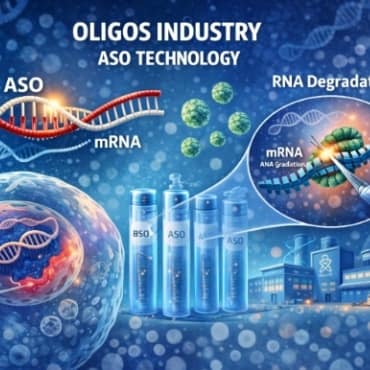
ASO TECHnology and sirna

Complete guide of sirna and aso technology

Explore the evolution of oligonucleotide therapeutics, from foundational chemical synthesis to advanced ASO technology and siRNA modalities. This comprehensive review analyzes RNase H-mediated degradation and RNAi mechanisms, highlighting the transformative role of GalNAc and LNP delivery systems in overcoming metabolic stability barriers for rare and metabolic disease treatment.

Scroll to Top