
Introduction
In the current biopharmaceutical landscape, the development of traditional small molecule drugs has largely reached a plateau. As a result, nucleotide therapeutics like ASO technology have emerged as the next definitive frontier, prompting leading global biopharmaceutical enterprises to strategically invest in both R&D and large-scale GMP commercial manufacturing.
Oligonucleotide (oligo) drugs represent a pivotal category of modern molecular targeted therapies, demonstrating vast clinical potential in treating genetic disorders, rare diseases, and metabolic conditions. The technical foundation of this field dates back to the breakthroughs in chemical synthesis and solid-phase carriers between the 1960s and 1980s. Since then, the field has evolved from simple short-chain DNA probes into highly stable, precision-targeted modalities, most notably ASO technology (Antisense Oligonucleotides) and siRNA (Small Interfering RNA).
ASO technology functions by directly binding to target mRNA, inducing RNase H-mediated degradation to achieve specific gene silencing. In contrast, siRNA leverages the RNA interference (RNAi) pathway to cleave target mRNA and inhibit protein expression. Despite their distinct mechanisms, the therapeutic efficacy of both modalities relies heavily on the optimization of delivery systems. Key strategies such as GalNAc-receptor-mediated hepatic targeting and Lipid Nanoparticle (LNP) systemic delivery have not only enhanced metabolic stability and tissue specificity but also significantly reduced dosage requirements and the risk of off-target side effects.
This article provides a systematic review of the evolutionary trajectory of oligonucleotide therapeutics, analyzes the mechanistic differences between ASO technology and siRNA, and highlights the critical role of advanced delivery platforms in modern oligo drug development.
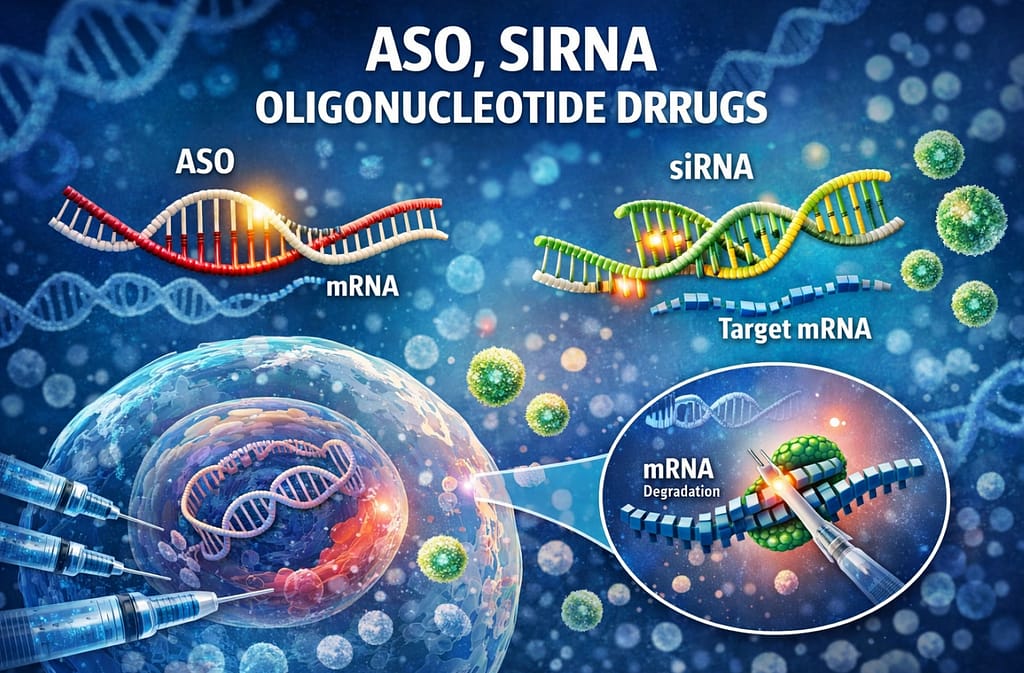
Classification and Applications of Oligonucleotide Therapeutics
1. Antisense Oligonucleotides (ASO Technology)
Single-stranded synthetic nucleic acids that bind to target mRNA to modulate gene expression via degradation or splicing modulation.
- Neuromuscular Disorders: Spinal Muscular Atrophy (SMA).
- Neurodegenerative Diseases: Amyotrophic Lateral Sclerosis (ALS / Lou Gehrig’s disease).
- Rare Hepatic Diseases: Hereditary Transthyretin-mediated (hATTR) amyloidosis.
2. miRNA Inhibitors (Antagomirs)
Single-stranded oligonucleotides similar to ASOs that achieve gene silencing by inhibiting specific microRNAs (miRNAs).
- Target Areas: Malignant tumors, Chronic Viral Hepatitis (Hepatitis C), and Cardiovascular/Fibrotic diseases.
3. small interfering RNA (siRNA)
Double-stranded RNA molecules that induce gene silencing through the RNA-induced silencing complex (RISC) pathway.
- Cardiovascular & Metabolic: Hyperlipidemia (high cholesterol), Hypertension.
- Viral Hepatitis: Chronic Hepatitis B (HBB).
- Rare Metabolic Disorders: Complement-mediated diseases, Primary Hyperoxaluria (PH).
4. miRNA Mimics
Double-stranded structures similar to siRNAs that replenish downregulated miRNAs to suppress disease-associated protein production.
- Target Areas: Primary Liver Cancer, Cutaneous (skin) scarring, Pulmonary Fibrosis, Type 2 Diabetes, and Non-Alcoholic Fatty Liver Disease (NAFLD).
5. Aptamers
Nucleic acid sequences that fold into specific 3D structures to bind to target proteins with high affinity, similar to antibodies.
- Hematology: Anemia caused by Myelodysplastic Syndromes (MDS) or hematologic malignancies.
- Ophthalmology: Age-related Macular Degeneration (AMD).
6. CpG Oligodeoxynucleotides (CpG ODN)
Short, single-stranded DNA molecules acting as immune activators/stimulators.
- Vaccine Adjuvants: Used in infectious disease vaccines (e.g., Hepatitis B, COVID-19) to enhance the strength and durability of the immune response.
7. CRISPR gRNA (guide RNA)
Engineered RNA sequences that direct the Cas9 nuclease to specific genomic loci for precise editing.
- Genetic Blood Disorders: Sickle Cell Disease (SCD), Beta-thalassemia.
- Hereditary Conditions: Leber Congenital Amaurosis (hereditary blindness), Hereditary Angioedema (HAE).
- Clinical Impact: Primarily targets life-threatening rare diseases where no alternative treatments exist.
Market Landscape of Oligonucleotide Therapeutics (2025)
1. Current Approval Status and Therapeutic Focus
As of 2025, approximately 25 oligonucleotide drugs have received regulatory approval for commercial production. The clinical focus remains predominantly on rare diseases, genetic disorders, and metabolic conditions, where traditional small molecules often fail to reach the target.
2. Market Size and Economic Impact
- Total Market Value: The global oligonucleotide market is currently valued between $20 billion and $40 billion USD.
- Commercial Performance: High-performing individual drugs in this class are achieving “blockbuster” status, with market valuations exceeding $1 billion USD per product.
- Growth Rate: The overall market is expanding at a robust Compound Annual Growth Rate (CAGR) of approximately 15%.
3. Dominance of Antisense Oligonucleotide Therapies (ASO Technology)
Antisense Oligonucleotide (ASO) therapies, which include PMO (Phosphorodiamidate Morpholino Oligomer) drugs, represent the cornerstone of the industry:
- Market Share: ASOs account for roughly 55% of the total market share.
- Commercial Maturity: This dominance is attributed to the fact that ASOs have the highest number of successfully commercialized products. Unlike emerging modalities, the ASO segment has established proven pathways for large-scale production and has achieved significant profitability.

Strategic Outlook: The Rise of the Oligonucleotide CDMO Market
1. Market Value and Commercial Adoption
In the field of chemical synthesis, the Oligonucleotide CDMO (Contract Development and Manufacturing Organization) market is currently valued at approximately $20 billion USD (when considering the broader nucleic acid and peptide synthesis ecosystem). This substantial valuation underscores a pivotal shift: oligonucleotide drugs have successfully transitioned from niche experimental candidates to mainstream commercial applications.
2. Accelerated Growth and Inflection Point
The sector is experiencing an aggressive expansion, with an annual growth rate of 15% to 20% (some segments even exceeding 21% CAGR). This trajectory indicates that the industry is entering a “Golden Era” or “Strategic Inflection Point.” The rapid growth is fueled by:
- The “Blockbuster” Effect: As more oligo-based therapies (like ASOs and siRNAs) receive FDA approval, the demand for large-scale, commercial-grade manufacturing capacity has outpaced internal pharmaceutical capabilities.
- Outsourcing Trends: Major pharmaceutical companies are increasingly pivoting toward an asset-light model, relying on specialized CDMOs for complex synthesis, purification, and regulatory compliance.
3. Key Drivers Behind the Market “Windfall”
To supplement your analysis, three critical factors are driving this imminent boom:
- Capacity Bottlenecks: The synthesis of complex oligonucleotides (e.g., GalNAc conjugates or modified backbones like PMO) requires specialized infrastructure. CDMOs that possess high-throughput and large-scale synthesis capabilities are currently in high demand.
- Diversification of Modalities: Beyond rare diseases, the market is expanding into chronic and high-prevalence indications—such as cardiovascular diseases and hepatitis B—which require significantly larger production volumes (metric tons vs. kilograms).
- Technological Maturity: Advances in Solid-Phase Extraction (SPE) and enzymatic synthesis are reducing costs, making these therapies more accessible and further incentivizing CDMO investment.
The Historical Roadmap of Oligonucleotide Therapeutics
Phase 1: The Incubation Era (1960s – Late 1970s)
- The Conceptual Foundation: This period marked the birth of the “oligo” concept. The primary milestones were the utilization of resins for short-chain DNA synthesis and the emergence of automated DNA synthesizers in the mid-to-late 1970s.
- The Synthesis Breakthrough: The development and application of Controlled Pore Glass (CPG) solid-phase supports in the late 1970s served as the foundational bedrock for the eventual commercialization of oligonucleotide drugs.
Phase 2: The Formative Era & First Success (1980s – 1998)
- The Birth of ASO Technology: In the 1980s, researchers demonstrated that a 13-mer DNA sequence could successfully inhibit viral replication.
- The First Milestone: This era culminated in 1998 with the FDA approval of Vitravene, the world’s first ASO drug, marking the official entry of oligonucleotides into the clinical pharmacopeia.
Phase 3: The siRNA Rise & Chemical Optimization (1998 – 2004)
- The siRNA Revolution: Following the discovery of RNA interference (RNAi), the first siRNA drug reached the market by 2004, initiating the commercial application of double-stranded RNA.
- The Chemical Foundation: This was a critical validation period for chemical modifications. Breakthroughs in 2’-O-Me and Phosphorothioate (PS) backbone modifications addressed stability and “druggability” issues, providing the essential infrastructure for future commercial success.
Phase 4: Clinical Breakthroughs & Delivery Innovation (2000 – 2012)
- Clinical Validation: ASOs and siRNAs moved into pivotal Phase II/III trials. Significant efficacy data, such as antisense therapies targeting ApoB, brought these drugs into the mainstream scientific spotlight.
- The “Delivery” Proof-of-Concept: This stage saw the early human trial breakthroughs and concept validation for Lipid Nanoparticles (LNP) and GalNAc delivery platforms, solving the “delivery dilemma” that had long hindered the field.
Phase 5: Delivery Maturation & Commercial Scalability (2013 – 2020)
- The Golden Age of Delivery: Pioneers like Ionis and Alnylam pushed GalNAc-conjugated oligos into the clinic. Pharmaceutical giants (e.g., Roche, Merck) recognized that delivery systems were the “key to the kingdom.”
- Systemic Success: The approval of Kynamro (the first systemic ASO) and the human validation of systemic siRNAs occurred during this window. By 2020, LNP and GalNAc technologies had fully matured and achieved widespread commercial implementation.
Phase 6: Expansion into Chronic Diseases & Gene Editing (2020 – 2025)
- Mainstream Integration: GalNAc and LNP systems enabled “blockbuster” chronic care drugs like Leqvio (a twice-yearly injection for lipid-lowering).
- Diverse Modalities: This era witnessed the formal approval of the first CRISPR-based therapy, Casgevy, and the rise of complex combination therapies involving mRNA, long RNA, and ASO/siRNA. Long-chain oligonucleotide research entered a period of rapid acceleration.
Phase 7: The Future – GMP-Scale Long-Chain Synthesis (2025 – Beyond)
- The Synthesis Paradigm Shift: The filing of the Co-polymer Coated CPG patent (pioneered by Poresyn Solutions) represents a landmark innovation. By combining the benefits of traditional resin and CPG technologies, this new solid-phase support enables the large-scale, GMP-grade production of long-chain oligonucleotides.
- The New Frontier: This technical leap provides the manufacturing cornerstone for treating complex cancers and cardiovascular diseases, moving the industry from niche rare-disease treatments to large-population therapeutic solutions.
The Strategic Dominance of ASO and siRNA in the Oligo Industry
In the landscape of oligonucleotide therapeutics, Antisense Oligonucleotide (ASO) treatment and siRNA are recognized as the core pillars of the industry. Their dominance is driven by a unique combination of high precision, established chemical frameworks, and immense market scalability.
1. Distinct Mechanisms of Action
- ASO (Antisense Oligonucleotide): ASOs achieve high therapeutic precision by binding directly to target mRNA. They work either by physically blocking translation or by recruiting RNase H to trigger the degradation of the mRNA strand.
- siRNA (Small Interfering RNA): Leveraging the RNA interference (RNAi) pathway, siRNAs are loaded into the RISC complex to precisely cleave target mRNA. Their primary advantage lies in their long-lasting gene silencing effect, often requiring less frequent dosing compared to traditional therapies.
2. Unrivaled Technical Maturity and Versatility
ASO and siRNA represent the most technologically “mature” modalities in the oligo space. Their success is built on:
- Sophisticated Chemical Modifications: A rich toolkit of modifications—including 2’-MOE, LNA, 2’-F, and PMO backbones—has been perfected to enhance metabolic stability and extend the in vivo half-life of the drugs.
- Seamless Delivery Integration: These molecules are highly compatible with advanced delivery systems. The synergy between ASOs/siRNAs and platforms like GalNAc (liver targeting) and LNPs (Lipid Nanoparticles) has solved many historical challenges regarding tissue distribution.
3. High Commercial Potential and R&D Efficiency
For global pharmaceutical giants like Roche and AstraZeneca, ASO and siRNA represent high-reward investments:
- Blockbuster Status: Many approved drugs in this category have reached or are projected to reach “blockbuster” status, with market valuations exceeding $1 billion USD per product.
- The “Platform” Advantage: Unlike small molecules, oligo drugs can be designed using a modular platform approach. Once a delivery system and chemical backbone are validated, new drugs can be developed rapidly by simply changing the nucleotide sequence. This shortened R&D cycle makes these therapies exceptionally attractive to Biotech firms.
4. Summary: The Industry Gold Standard
Ultimately, ASO and siRNA are considered the “Gold Standard” of oligonucleotides because they offer the highest chemical plasticity, the best compatibility with delivery systems, and the most straightforward industrial scalability. They are not just therapeutic tools but proven commercial platforms capable of addressing a wide array of human diseases.
ASO VS siRNA Technology
What is the difference between ASO and siRNA?
1. Mechanisms of Action
- ASO (Antisense Oligonucleotides): ASOs operate through Gene Silencing and Gene Repair (Splicing Modulation).
- The primary pathway is the RNase H-dependent degradation mode, which destroys mRNA fragments.
- Additionally, ASOs can act via Translational Blockade by physically obstructing the mRNA, or through Splicing Modulation, which allows for “exon skipping” (masking mutated segments) or “exon inclusion” (restoring missing segments).
- siRNA (Small Interfering RNA): siRNAs function exclusively through Gene Silencing.
- They utilize the RISC complex to precisely shred specific mRNA fragments.
- For mRNA with only partial sequence matching, siRNA can also attach to the strand to inhibit protein translation.
- Due to the unique catalytic recycling of the RISC complex, a single siRNA can target multiple mRNA fragments repeatedly, resulting in long-lasting therapeutic effects (e.g., dosing schedules as infrequent as once every six months).
2. Structural Differences
- Length and Molecular Weight:
- ASO: Typically 15–25 bases in length (most commercial drugs are 18–20 bases). The molecular weight is relatively small (~5–8 kDa).
- siRNA: Typically 19–25 base pairs (the industry standard is 21–23 bps). The molecular weight is significantly larger (~13–15 kDa).
- Configuration and Stability:
- ASO: A single-stranded (DNA or RNA) molecule. It is active in both the nucleus and the cytoplasm. When modified with Phosphorothioate (PS), the structure becomes highly rigid and resistant to enzymatic degradation.
- siRNA: A double-stranded RNA molecule that functions only in the cytoplasm. Structurally, it is more fragile than ASOs.
3. Delivery Systems
- ASO Delivery: Due to Phosphorothioate (PS) modification, ASOs are structurally robust and have a high affinity for plasma proteins, often allowing for “naked” delivery without additional systems. However, for hepatic (liver) targets, GalNAc remains the preferred delivery solution; its precise navigation to hepatocytes significantly reduces required dosages and enhances efficiency.
- siRNA Delivery: siRNAs are extremely fragile. They cannot utilize heavy PS modification like ASOs because excessive PS modification conflicts with the RISC complex functionality. Therefore, siRNAs must be encapsulated in a protective “shell,” such as Lipid Nanoparticles (LNP), or conjugated with GalNAc. These systems ensure the drug is delivered precisely to the liver with minimal interference to other organs, resulting in higher safety profiles.
Chemical Modification of ASO & siRNA Drugs
1. Phosphate Backbone Modification
Phosphorothioate (PS): This is the most fundamental and critical modification, where a non-bridging oxygen atom in the phosphate backbone is replaced by a sulfur atom.
- It drastically improves resistance to nuclease degradation.
- It increases binding affinity to plasma proteins, preventing rapid renal clearance.
- Currently, PS modification is a standard feature for nearly all ASO treatments.
2. Five-Carbon Sugar (Ribose) Modifications
- 2′-O-Methyl (2′-OMe) & 2′-O-Methoxyethyl (2′-MOE): These increase the binding affinity to the target mRNA and improve overall stability.
- 2′-Fluoro (2′-F): This modification significantly boosts affinity and is frequently utilized in siRNA drugs.
- Locked Nucleic Acid (LNA): This involves a chemical “bridge” that locks the ribose into a specific conformation. A short LNA sequence acts like “superglue” for the target, allowing for the design of shorter ASO drugs.
3. Delivery Conjugates
- GalNAc Conjugation: Three GalNAc molecules are attached to the 3′ (or sometimes 5′) end via a branched linker. This exploits the ASGPR (Asialoglycoprotein Receptor) on hepatocyte surfaces, which has a high affinity for GalNAc. It is the gold standard for liver targeting.
- Cholesterol Conjugation: Attached to the end of the nucleic acid chain, its lipophilic nature allows it to penetrate cell membranes. Due to its affinity for serum proteins, it is often used for delivery to the lungs, muscles, and non-liver tissues.
- Lipids/Lipopeptides: Similar to cholesterol, these possess strong lipophilic properties to assist in membrane crossing.
- Antibody-Oligonucleotide Conjugates (AOC): A monoclonal antibody (e.g., targeting the TfR1 receptor) is attached to the end of the oligo. The goal is to deliver the drug into muscle tissue and the brain.
4. Base Modifications
- 5-Methylcytosine (5-mC): Used in ASOs to avoid triggering inflammatory responses.
- Pseudouridine: Frequently used in mRNA vaccines to enhance stability and reduce immunogenicity.
5. Combinatorial / Hybrid Modification Strategies
In the pharmaceutical industry, a single modification is rarely used alone. Instead, a combinatorial or hybrid strategy is employed to address the complex challenges of the internal human environment, such as:
- Nuclease degradation and short plasma half-life.
- Immune stimulation (via TLR or RIG-I receptors).
- Poor cellular uptake and delivery system compatibility.
Since any single modification can usually only solve one or two of these issues, mainstream drugs use mixed patterns:
- ASO Patterns: Typically use a PS backbone combined with 2′-MOE or LNA. A common “gapmer” design features modified wings (using 2′-MOE or LNA) at both ends while leaving a central DNA core unmodified to support RNase H activity.
- siRNA Patterns: Generally, every nucleotide is modified at the 2′ position with 2′-F or 2′-OMe, while a small number of PS modifications are placed at the ends of the strands.
The Latest Oligonucleotide Technology
The following provides a comprehensive overview of emerging technologies in the oligonucleotide industry, including gene editing breakthroughs, advanced chemical modifications, and next-generation delivery and synthesis platforms.
1. CRISPR gRNA Technology: The Next Frontier
While ASOs and siRNAs are mature modalities currently dominating chronic disease markets (such as hypertension and hyperlipidemia), CRISPR gRNA represents the next generation of R&D.
- Clinical Cure: Unlike ASOs/siRNAs that require ongoing treatment, CRISPR operates at the DNA level. Theoretically, it offers a “one-and-done” treatment to achieve a permanent clinical cure.
- Structural Repair: For diseases caused by missing gene segments—which are difficult to address with gene silencing—CRISPR can repair or insert gene fragments. The gRNA (guide RNA) used for navigation typically consists of approximately 100 nucleotides.
- Delivery Strategies:
- Ex Vivo (External): The most mature method involves extracting hematopoietic stem cells from a patient’s blood, introducing the pre-assembled Cas protein + gRNA complex (RNP) outside the body, and re-infusing them. This is highly effective but complex and prohibitively expensive.
- In Vivo (Internal): Currently in the R&D stage, this involves using LNP delivery systems for liver targeting (administered like a simple injection) or Viral Vectors (AAV) to deliver the machinery to specific areas like the eyes or brain.
2. Mesyl Phosphoramidate (MsPA) Modification
MsPA is currently the most significant modification for siRNA, designed to enhance the loading efficiency of the RISC complex and improve mRNA cleavage potency.
- Chemical Mechanism: In traditional nucleic acids, nucleotides are connected by phosphodiester bonds. While PS modification replaces an oxygen atom with sulfur, MsPA modification replaces it with a Methyl group (-CH3).
- Reducing Side Effects: Full PS modification can interfere with intracellular proteins or trigger unwanted immune responses. The current mainstream strategy utilizes a “hybrid” approach: maintaining stability with PS while selectively replacing certain nodes with MsPA to significantly reduce hepatotoxicity and immunogenicity.
- Strategic Distribution: PS modifications are typically placed at the four ends of the siRNA (the 5′ and 3′ ends of both the guide and passenger strands) to prevent exonuclease “nibbling.” Conversely, MsPA is strategically placed at the 5′ end of the Guide Strand (specifically between nucleotides 1 and 2).
- Impact: This precision modification extends siRNA survival within cells from weeks to months, enabling the “once-every-six-months” dosing schedule while minimizing systemic side effects.
3. GalNAc Delivery System: The Gold Standard for Liver Targeting
GalNAc is a high-efficiency ligand that binds specifically to the ASGPR receptor on hepatocyte surfaces, enabling precise drug entry into the liver.
- The L96 Milestone: The commercialization of GalNAc was solidified by Alnylam’s L96, a specific Tri-antennary (three-branched) GalNAc structure.
- Industrial Advantage: L96’s structure is optimized for automated solid-phase synthesis, allowing it to be synthesized directly onto the end of an siRNA. This enables high-purity, large-scale industrial production.
- Efficiency: After entering the cell, L96 efficiently dissociates from the receptor, allowing the receptor to return to the cell surface for reuse, further boosting delivery efficiency.
- Commercial Value: GalNAc enables Subcutaneous Injection (replacing the intravenous drips required by traditional LNPs) and allows biotech companies to use a single “platform” for multiple liver-related diseases (Hepatitis B, Hemophilia, Gout, etc.) by simply changing the 20-base sequence. This saves millions in R&D costs.
4. Co-polymer Coated CPG: Solid-Phase Support Innovation
Developed by Poresyn Solutions, this new patented CPG hyper link technology represents a paradigm shift in oligonucleotide synthesis by combining Polystyrene (PS) resin with Controlled Pore Glass (CPG).
- The “Hyper-Link” Advantage: This hybrid carrier possesses the high loading capacity of PS resin and the stable long-chain synthesis capability of CPG. The resin coating protects the core from solvent corrosion and prevents CPG fragments from contaminating the product.
- GMP-Level Production: By utilizing Hyper-link CPG, biotech companies can move production to true GMP-grade standards.
- Economic Impact: The loading capacity is significantly higher than traditional CPG, allowing companies to save on capital expenditure (equipment) and shorten production cycles. Most importantly, the high purity achieved reduces downstream purification costs by over 30%, serving as the cornerstone for the large-scale commercialization of long-chain oligonucleotide drugs.
FAQ for siRNA and ASO Treatment
Is siRNA an oligonucleotide drug?
Yes. siRNA (small interfering RNA) is a specialized class of oligonucleotide drug. In fact, it has become one of the most rapidly advancing modalities in modern medicine. Unlike traditional small molecules, siRNAs leverage the body’s natural RNA interference (RNAi) pathway to achieve potent gene silencing. Its clinical value is exceptionally high because of its long-lasting efficacy; once loaded into the RISC complex, a single dose can remain active for months, making it a cornerstone for treating chronic conditions like hyperlipidemia.
What is an ASO in medical terms?
ASO stands for Antisense Oligonucleotide.
What are the latest advancements in ASO technology?
The most significant recent advancement in ASO technology is the shift from “rare disease” treatments to large-scale chronic disease management. One breakthrough is the integration of GalNAc (N-acetylgalactosamine) conjugation, which allows ASOs to be delivered specifically to hepatocytes with high precision, drastically reducing the required dose and systemic toxicity.
Furthermore, 2024 and 2025 have seen a surge in “personalized” ASOs. For example, the approval of ASOs like Olezarsen for familial chylomicronemia syndrome (FCS) and the development of custom sequences for ultra-rare mutations in ALS (such as CHCHD10) demonstrate that ASO technology is becoming more adaptable. Another major frontier is the improvement of CNS (Central Nervous System) delivery; researchers are now utilizing shuttle-mediated transport and advanced “gapmer” designs to cross the blood-brain barrier more effectively, opening doors for treating Alzheimer’s and Parkinson’s.
What are the side effects of ASO therapy?
While ASOs are revolutionary, they face several limitations and side effects:
- Lack of Persistence: Unlike siRNAs, which can last for months, ASOs generally have a shorter duration of effect, often requiring more frequent injections to maintain gene suppression.
- Tissue Restriction: Currently, ASOs are highly effective for liver and spinal cord targets (via intrathecal injection), but delivering them effectively to muscle tissue or across the entire brain remains a massive challenge.
- Toxicity: High doses of phosphorothioate (PS)-modified ASOs can lead to injection site reactions, fever, or chills. In some cases, off-target binding can lead to hepatotoxicity (liver damage) or thrombocytopenia (low platelet count).
What is the biggest downfall of gene therapy?
The most significant “downfalls” or barriers for gene therapy today are affordability and accessibility.
- Extreme Costs: Many gene therapies, such as Zolgensma for SMA, cost over $2 million USD per dose. This makes them nearly inaccessible in many parts of the world and places an immense burden on healthcare systems.
- Limited Scope: Despite the hype, the number of approved drugs remains small compared to the vast array of human diseases. Most gene therapies currently target rare, monogenic (single-gene) disorders, leaving complex diseases like most cancers or heart disease largely unaddressed.
- Manufacturing Complexity: Producing viral vectors (like AAV) or high-purity long-chain oligos at a GMP scale is technically difficult and incredibly time-consuming, leading to significant supply chain bottlenecks.
What is the first ASO drug?
The first ASO drug approved by the FDA (in 1998) was Fomivirsen (marketed under the brand name Vitravene).
Fomivirsen was a milestone in biotechnology, designed to treat cytomegalovirus (CMV) retinitis in immunocompromised patients, particularly those with AIDS. It was a 21-mer phosphorothioate-modified DNA strand administered via direct injection into the eye (intravitreal). By binding to the mRNA of the virus, it blocked the production of proteins essential for viral replication. Although it proved that antisense technology could work in humans, it was eventually withdrawn from the market in the early 2000s due to the success of High-Activity Antiretroviral Therapy (HAART), which made CMV retinitis much rarer. Nevertheless, it paved the legal and scientific way for all modern ASO therapies like Spinraza.
Here is the FAQ section formatted for easy copying and pasting into a WordPress post. I have used H3 headings for the questions and ensured the answers begin on a separate line.
Why do ASO drugs often function effectively without LNP delivery systems?
This is primarily attributed to the high degree of Phosphorothioate (PS) modification within the ASO structure. This modification grants ASOs a strong affinity for plasma proteins, enabling them to enter cells directly through endocytosis—a mechanism scientifically referred to as “Gymnotic uptake.”
What are the most prominent ASO and siRNA drugs currently on the market?
Major commercialized ASO therapies include Spinraza (Nusinersen) for Spinal Muscular Atrophy (SMA) and various exon-skipping treatments for Duchenne Muscular Dystrophy (DMD). Leading siRNA blockbusters include the long-acting lipid-lowering medication Leqvio (Inclisiran) and Onpattro (Patisiran) for hereditary ATTR amyloidosis.
Can oligonucleotide therapeutics achieve a functional cure for Hepatitis B (HBV)?
Multiple siRNA candidates are currently in late-stage clinical trials designed to degrade all HBV antigens (such as HBsAg). The consensus in the medical community is that combining siRNA with immunomodulators represents the most viable pathway toward a clinical cure for Hepatitis B.
What is the structural composition of a Gapmer ASO?
A Gapmer is the dominant architectural design for ASOs. It consists of a central DNA region (the “gap”) that recruits RNase H to cleave the target mRNA, flanked by chemically modified nucleotide “wings” (such as 2′-MOE or LNA) that protect the molecule from degradation and increase binding affinity.
How do miRNA Mimics differ from ASOs and siRNAs?
In technical terms, miRNA Inhibitors are a specialized type of single-stranded ASO designed to block microRNA. Conversely, miRNA Mimics are double-stranded structures that function similarly to siRNA; they are used to restore or “mimic” the function of beneficial miRNAs that are deficient in a patient.
Why do short oligonucleotides possess such significant therapeutic potency?
Even with a relatively short sequence, oligonucleotides can precisely modulate gene expression at the RNA level. This allows them to treat the root genetic cause of a disease by regulating protein production, rather than simply managing downstream symptoms.
What are the primary disease indications for ASO and siRNA drugs?
These drugs are primarily deployed to treat genetic disorders, rare diseases, metabolic syndromes, cardiovascular diseases, and a wide range of liver-related indications.
Are ASO and siRNA drugs easier to develop than traditional small-molecule drugs?
Generally, yes. Oligonucleotide development is sequence-driven and platform-based. Once a delivery and modification platform is validated, developing a new drug only requires changing the 20-base sequence. This allows for rapid iteration and shorter clinical cycles, as developers do not need to build a unique R&D framework for every individual target.
What is the current safety profile of ASO and siRNA therapies?
Thanks to advanced chemical modifications and precise delivery technologies (like GalNAc), most FDA-approved ASO and siRNA drugs exhibit acceptable safety profiles and are well-tolerated by patients during long-term clinical administration.
How are oligonucleotide drugs manufactured at scale?
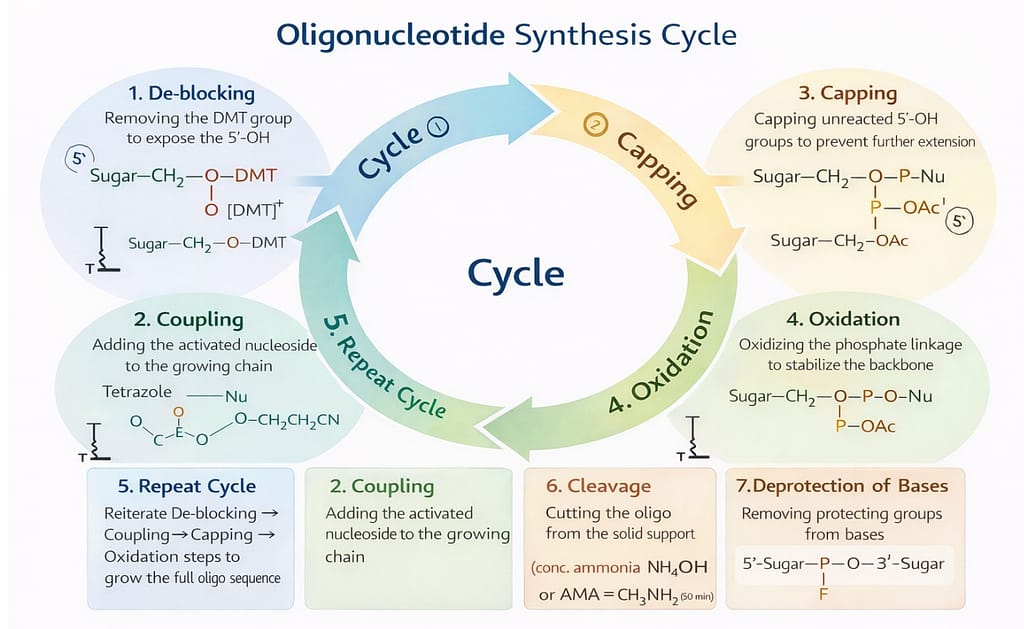
The manufacturing process relies on solid-phase chemical synthesis. This is followed by deprotection, high-performance liquid chromatography (HPLC) purification, and rigorous quality control to ensure the final product meets GMP (Good Manufacturing Practice) standards.
What factors are driving the rapid growth of the Oligonucleotide CDMO market?
The high complexity of oligonucleotide synthesis, purification, and technical scale-up encourages pharmaceutical companies to outsource production. Specialized CDMOs provide the niche expertise and infrastructure required to handle these processes efficiently and at high purity levels.
What is the future outlook for ASO and siRNA therapeutics?
The next phase of development will focus on extra-hepatic delivery (targeting the CNS, muscles, and heart), further reducing dosing frequency, and expanding from rare genetic niches into the broad-market management of chronic diseases.
What are the currently approved ASO drugs?
As of 2025, the landscape of approved Antisense Oligonucleotide (ASO) therapies has expanded significantly, moving from niche applications to life-changing treatments for several severe conditions. Spinraza (Nusinersen) remains the gold standard for Spinal Muscular Atrophy (SMA), functioning as a splicing modulator to increase functional SMN protein levels. For Duchenne Muscular Dystrophy (DMD), a suite of exon-skipping ASOs including Exondys 51 (Eteplirsen), Vyondys 53, and Amondys 45 have been approved to restore the reading frame of the dystrophin gene.
In the metabolic space, Kynamro (Mipomersen) was a pioneer for familial hypercholesterolemia, while Wainua (Eplontersen) recently gained approval for the treatment of polyneuropathy in hereditary transthyretin-mediated (hATTR) amyloidosis, utilizing advanced GalNAc conjugation for enhanced liver targeting. Other notable approvals include Tegsedi (Inotersen) for hATTR and Qalsody (Tofersen), a landmark ASO targeting the SOD1 mutation in Amyotrophic Lateral Sclerosis (ALS). These approvals demonstrate the versatility of ASO technology in addressing diverse genetic mechanisms across various organ systems.
Last year, my 68-year-old partner was diagnosed with Lou Gehrig’s disease also known as ALS. Speaking and swallowing were two of his challenges. His collapse was swift and catastrophic, and neither Standard treatments like riluzole and high dose B12 did very little for him. He would not have survived if our primary care physician hadn’t given him attentive care and attention, as the hospital center didn’t provide any psychological support. His fall was abrupt and catastrophic. His hands and legs gave way to weakness in his arms, he used different supplements that didn’t work, so last July, he tried the ALS/MND protocol—the best decision ever! His symptoms eased, his energy returned, and he sleep soundly. He feels like a new man, and he can walk and exercise again. We got the ALS/MND protocol from google Limitless Herbs Center
My husband was diagnosed of Parkinson’s Disease a couple of years ago, he had severe fatigue, difficulty with mobility and sleeping. He was placed on Sinemet 3 times daily, which helped but only for a short while. So we decided to try alternative treatment and began on PD-5 protocol , It has made tremendous difference for my husband, he had improved walking balance, muscle strength and he is now very active. His Parkinson’s is totally under control, we got the treatment from Limitless healthcenter . c o m. This treatment is a breakthrough for PWP!